
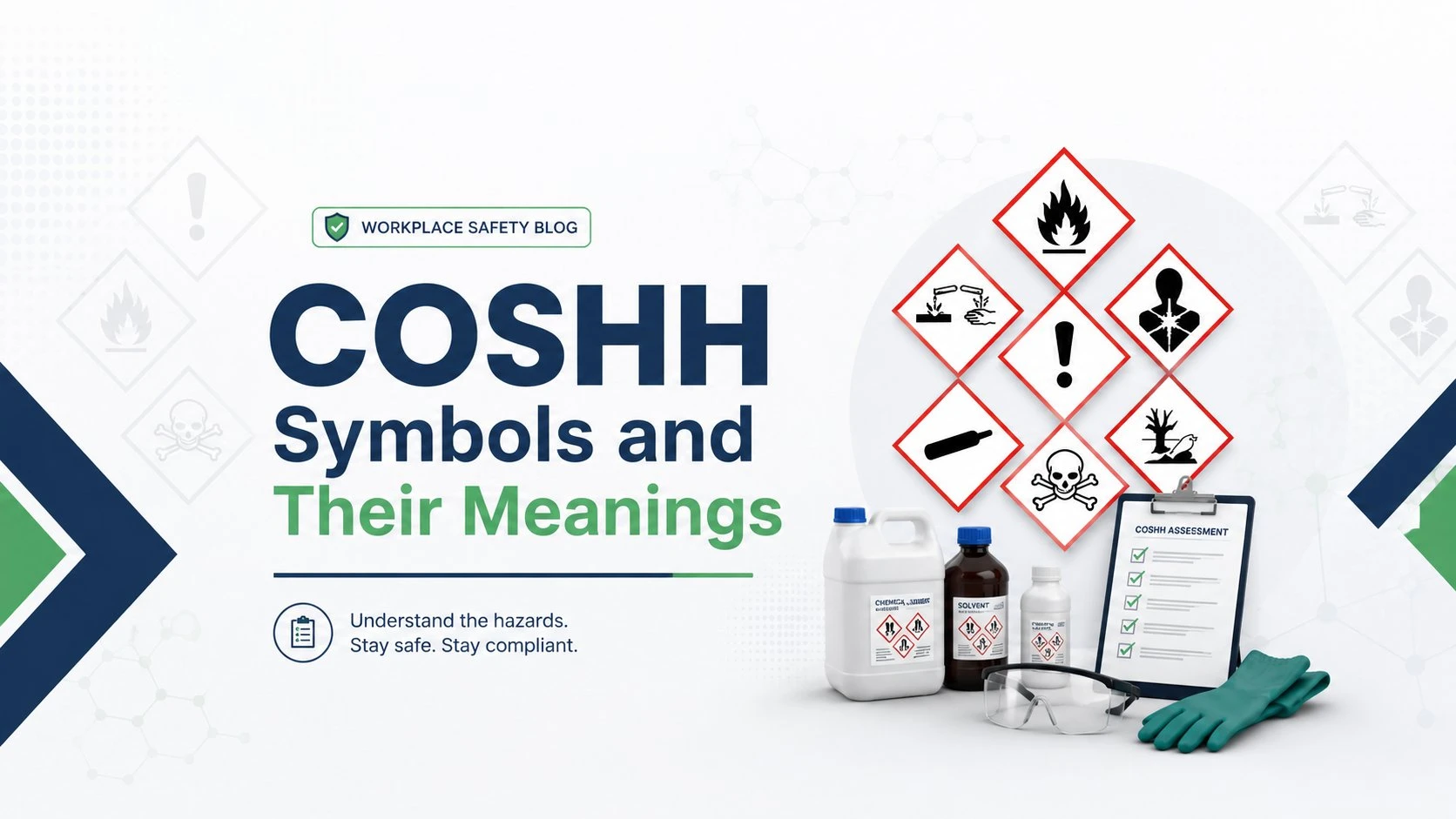
A guide to the nine hazard pictograms you'll see on UK chemical containers, what each one warns of, and how the system replaced the older orange CHIP symbols.
If you've ever picked up a bottle of bleach, a can of paint or a bag of dry cement and noticed a red-bordered diamond with a black symbol inside, you've already seen a COSHH symbol. There are nine of them in current use across the UK, and they cover the full range of chemical hazards — from acute poisoning and corrosive burns through to long-term effects like cancer and reproductive harm.
A small point of accuracy worth getting out of the way first: "COSHH symbols" is the term everyone uses, but the symbols themselves aren't defined by COSHH. They're set out in the GB CLP Regulation — the retained UK version of the EU's Classification, Labelling and Packaging Regulation — and they're properly called CLP hazard pictograms. CLP tells you what the hazard is; COSHH tells you what to do about it. The two regimes work together, which is why the labels feed directly into a COSHH risk assessment for any substance in scope.
For an overview of how the symbols fit into the wider picture, see what COSHH is. This page covers the symbols themselves.
How the current symbols came to be
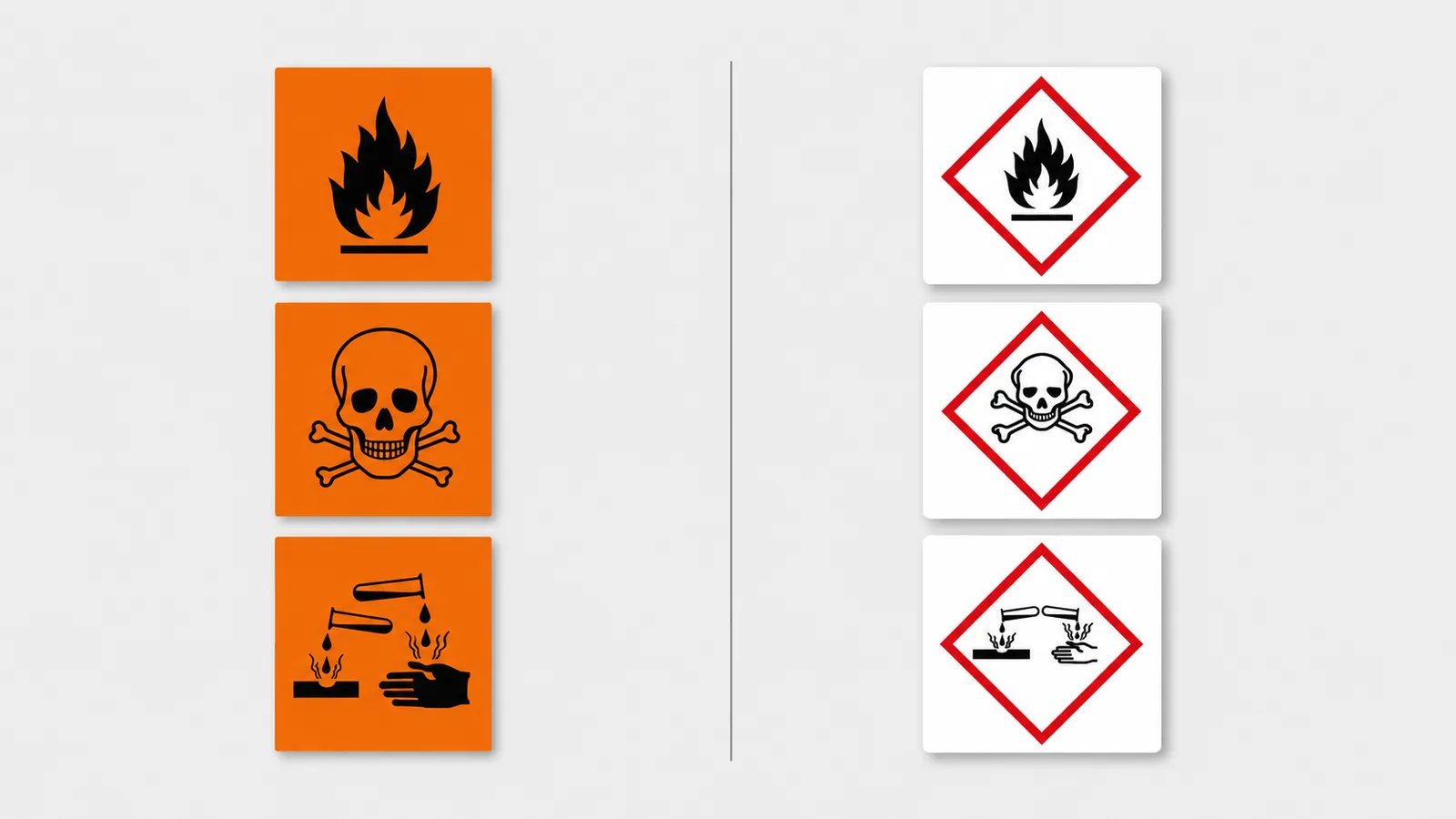
The pictograms originate from the United Nations' Globally Harmonised System of Classification and Labelling of Chemicals (GHS), which the UN adopted in 2003. The system was designed to give every country in the world the same chemical hazard symbols, so that a chemical labelled "flammable" in Birmingham reads the same way in Bilbao, Brisbane and Bangkok. Before GHS, the UK used the orange-square CHIP symbols (Chemicals (Hazard Information and Packaging for Supply) Regulations), the US used a different system altogether, and the international trade in chemicals was a mess of conflicting hazard communication.
The EU brought GHS into European law as the CLP Regulation in 2008, and the UK transition ran in two stages. Substances had to be classified and labelled under CLP from 1 December 2010. Mixtures followed on 1 June 2015. A two-year transition period allowed mixtures already in the supply chain to be sold under the old CHIP labels until 1 June 2017. After Brexit, the EU CLP Regulation was retained in UK law as the GB CLP Regulation, with HSE taking over the functions previously handled by the European Chemicals Agency.
In practice this means three things. The pictograms in use today are red-bordered diamonds with a white background and a black symbol inside. The older orange squares were valid until 1 June 2017 but should not appear on any new stock. Older containers in long-term workplace storage may still carry the orange symbols, and replacing the labels isn't generally required as long as the information was correct when the substance was supplied — but workers need to be told how to read them.
The nine pictograms
Each pictogram has an official identifier (GHS01 to GHS09), a name, and a defined meaning. Most labels carry one or two pictograms; complex chemicals can carry more. The signal word "Danger" or "Warning" appears alongside, indicating the severity of the hazard category.
GHS01 — Explosive (exploding bomb)
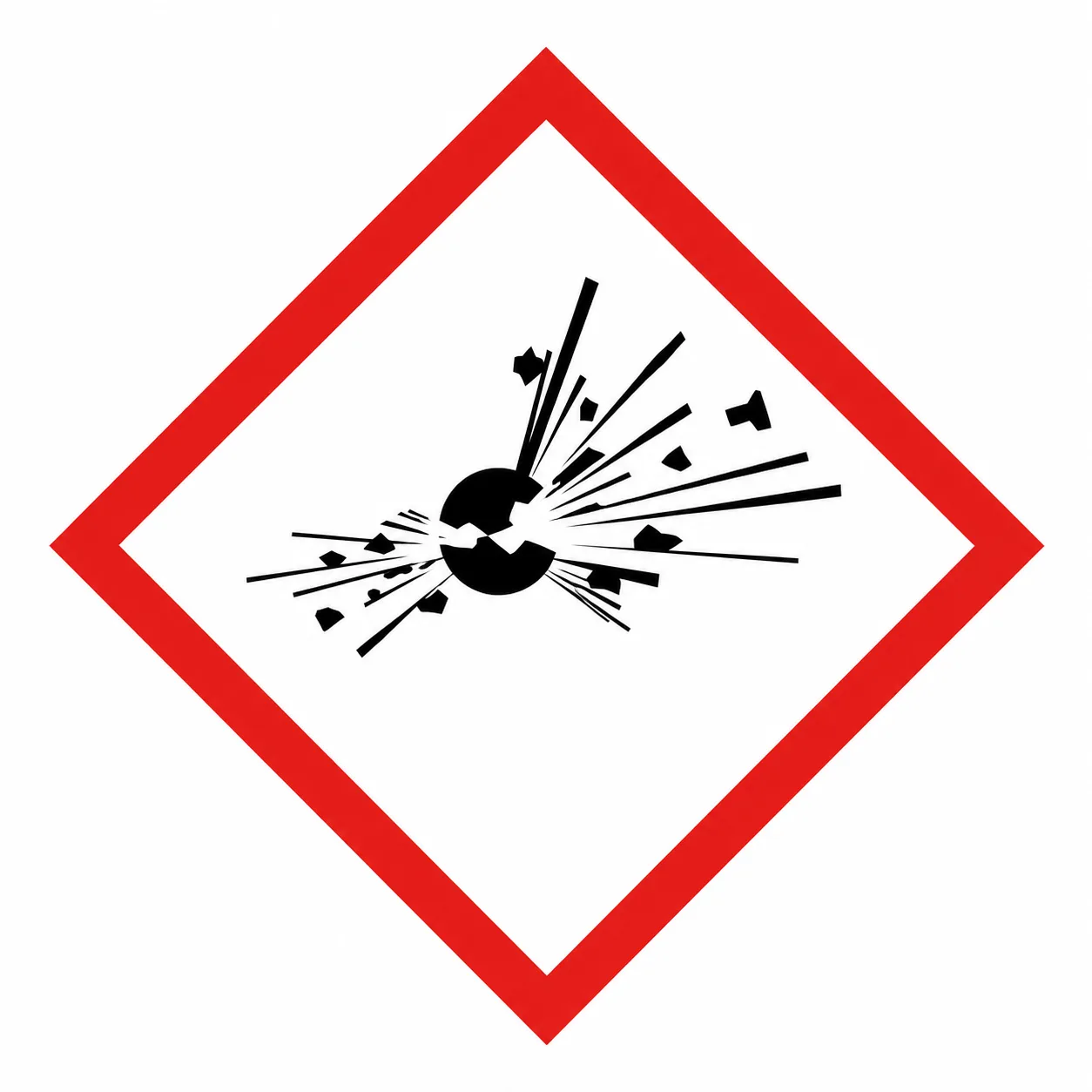
The exploding bomb pictogram warns of substances that can detonate, explode in a fire, or undergo a violent self-reactive decomposition. It covers unstable explosives, mass-explosion hazards, and self-reactive substances and mixtures in certain categories. Most workplaces won't encounter true explosives, but the symbol also appears on some organic peroxides used in industrial processes and on some self-reactive chemicals used in research labs. Substances carrying this symbol require special storage and handling beyond ordinary COSHH controls, and may also fall under explosives licensing or DSEAR.
GHS02 — Flammable (flame)
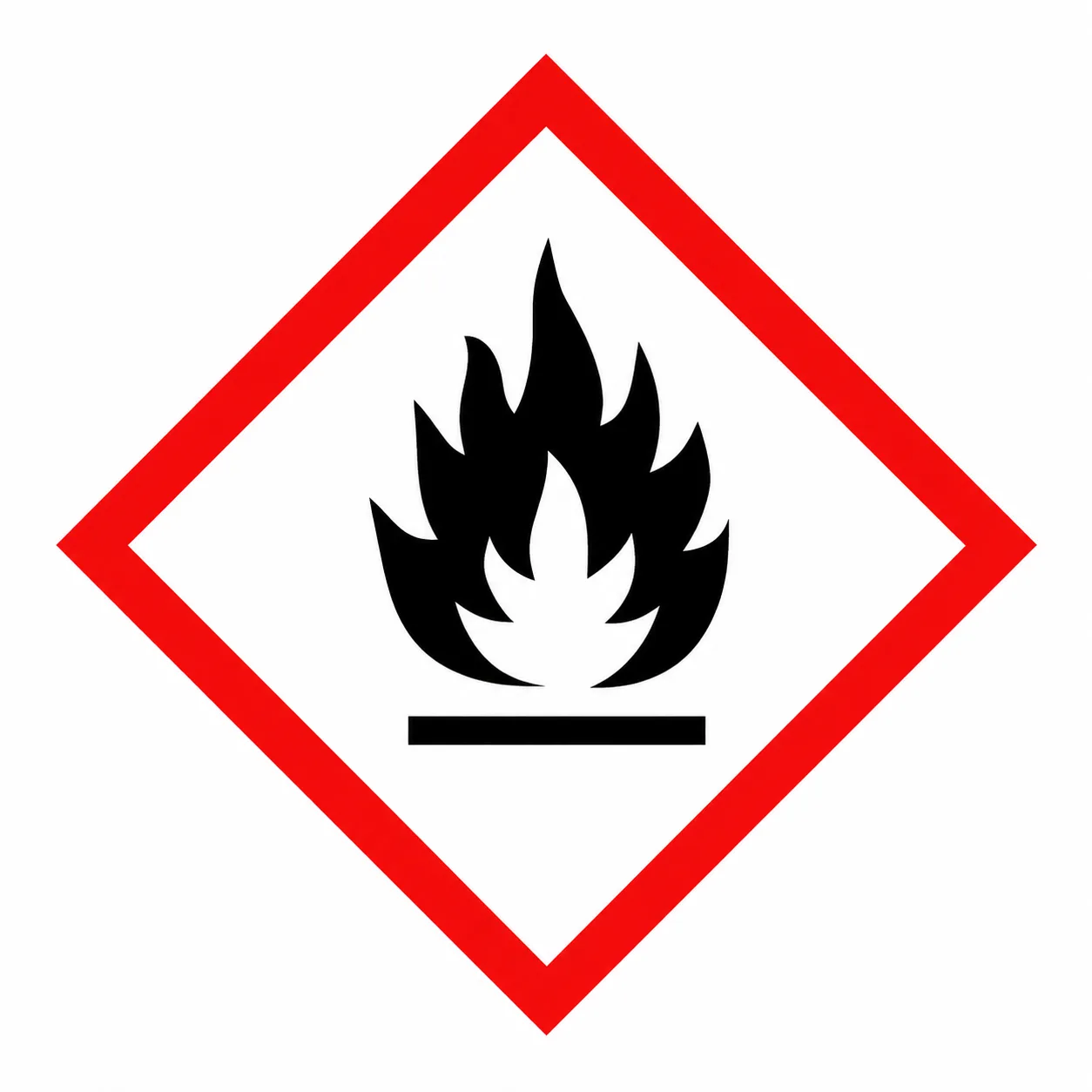
The flame pictogram covers flammable liquids, gases, aerosols and solids — anything that catches fire easily under normal conditions. It also covers pyrophoric substances (which ignite on contact with air) and self-heating substances. Common workplace examples include petrol, white spirit, acetone, ethanol-based hand sanitiser, aerosol propellants and many industrial solvents. Flammable substances are typically also covered by DSEAR for the fire and explosion risk, and they need appropriate storage — usually in fire-resistant cabinets meeting BS EN 14470-1.
GHS03 — Oxidising (flame over a circle)
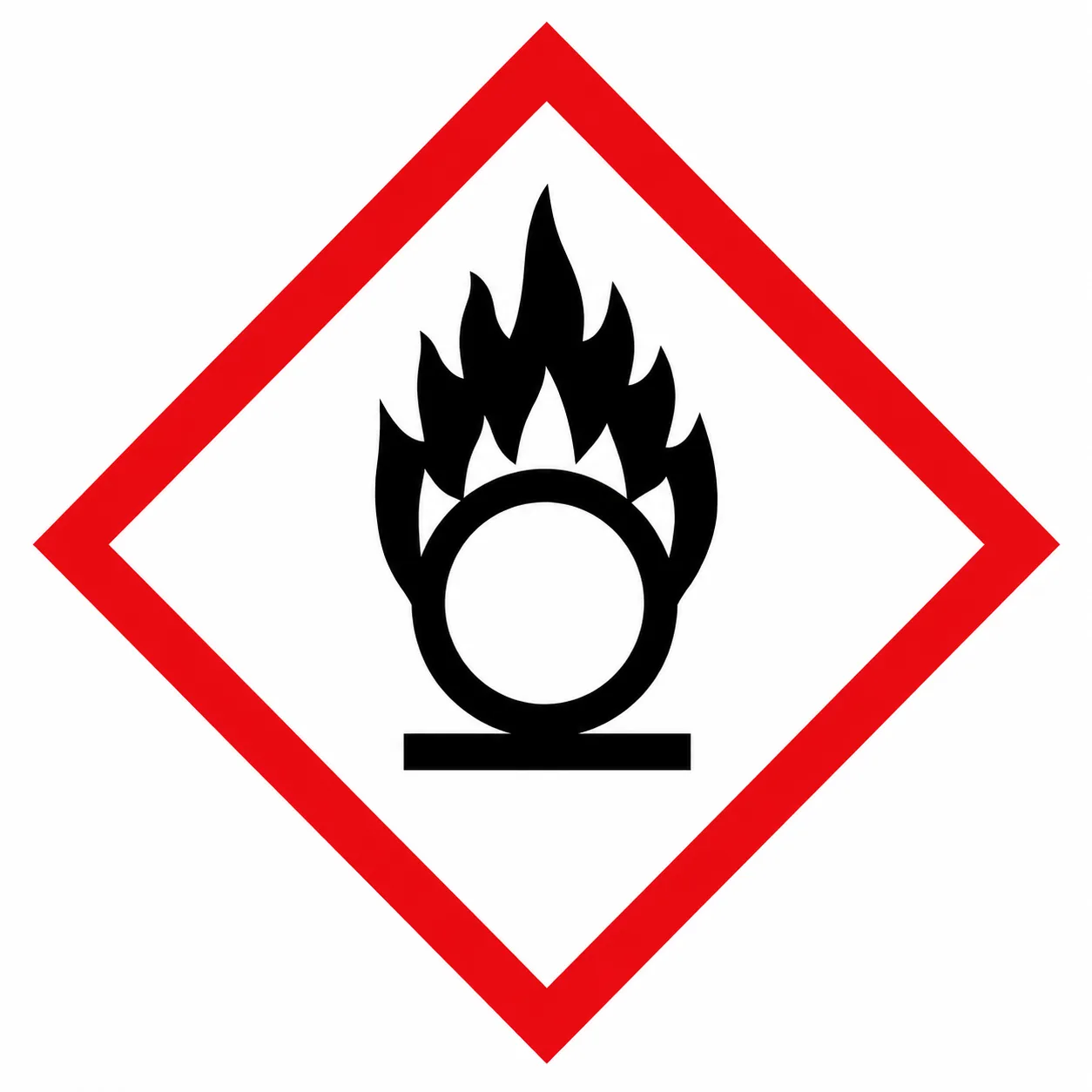
The flame-over-a-circle pictogram identifies oxidisers — substances that release oxygen and intensify fires, sometimes causing combustion of materials that wouldn't otherwise burn. Hydrogen peroxide, sodium hypochlorite (bleach), potassium permanganate and nitric acid all carry this symbol. The major workplace risk is mixing an oxidiser with an organic substance or a reducing agent — the reaction can be vigorous and sometimes explosive. Oxidisers must be stored separately from flammables and organics.
GHS04 — Gas under pressure (gas cylinder)
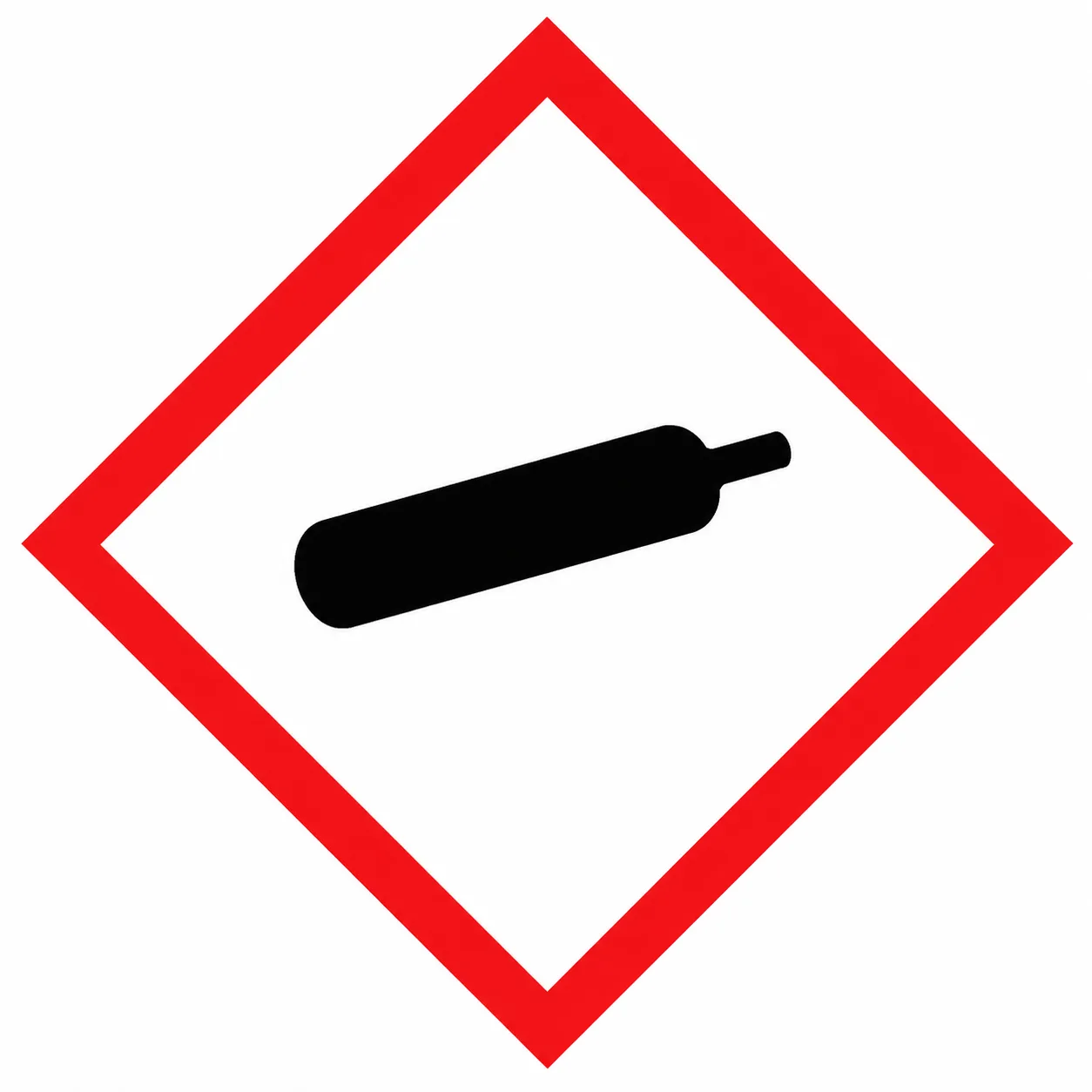
The gas cylinder pictogram warns of compressed, liquefied, refrigerated liquefied and dissolved gases. The hazard isn't necessarily the gas itself — the symbol appears on harmless gases like nitrogen and helium just as much as on toxic ones. The hazard is the pressure. A damaged cylinder can rocket through walls, and a fire-exposed cylinder can rupture violently. Common workplace examples are oxy-acetylene welding cylinders, CO₂ cylinders for hospitality and laboratory use, and refrigerant cylinders. Gas cylinder storage is covered by the separate BS EN 14470-2 standard.
GHS05 — Corrosive (chemical corroding skin and metal)
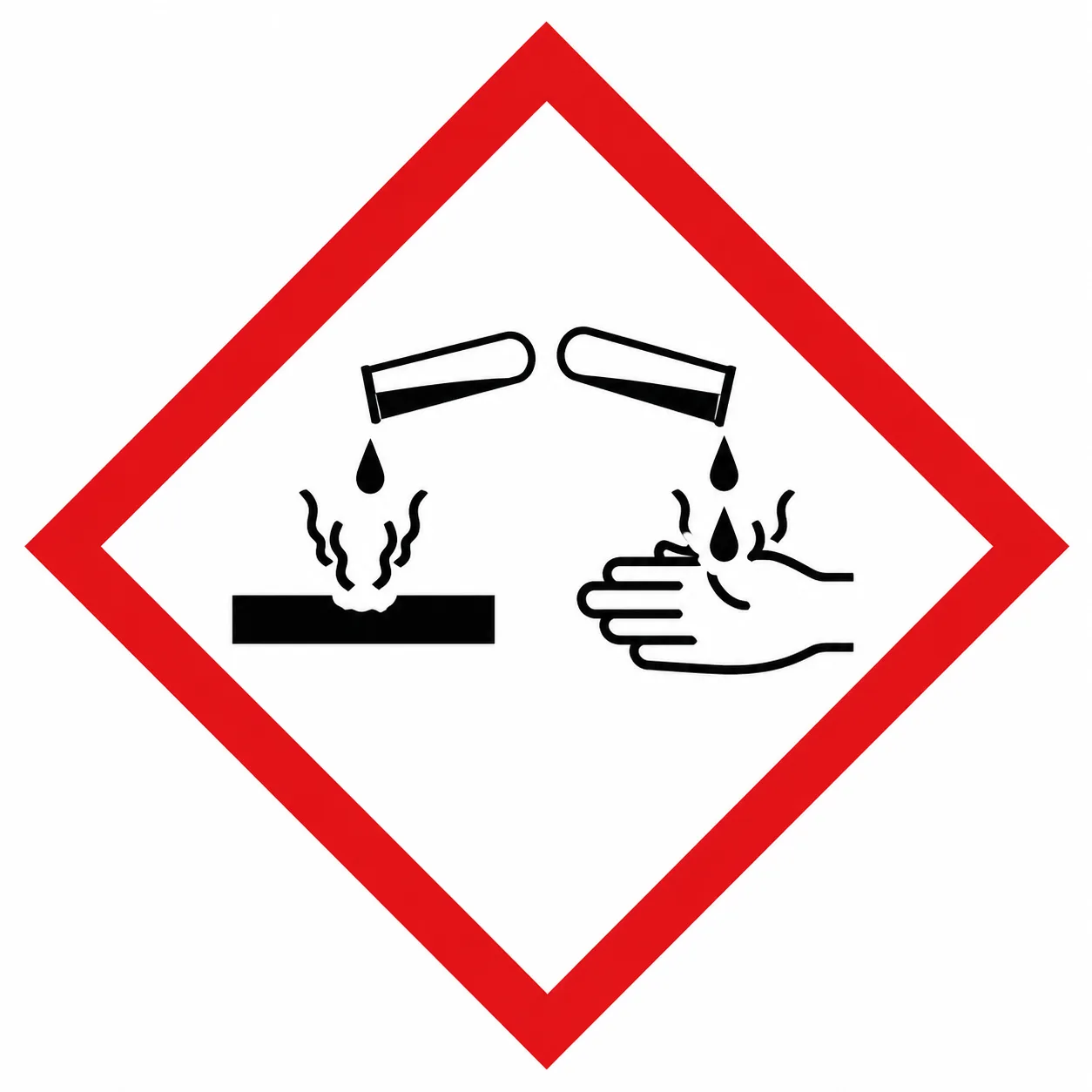
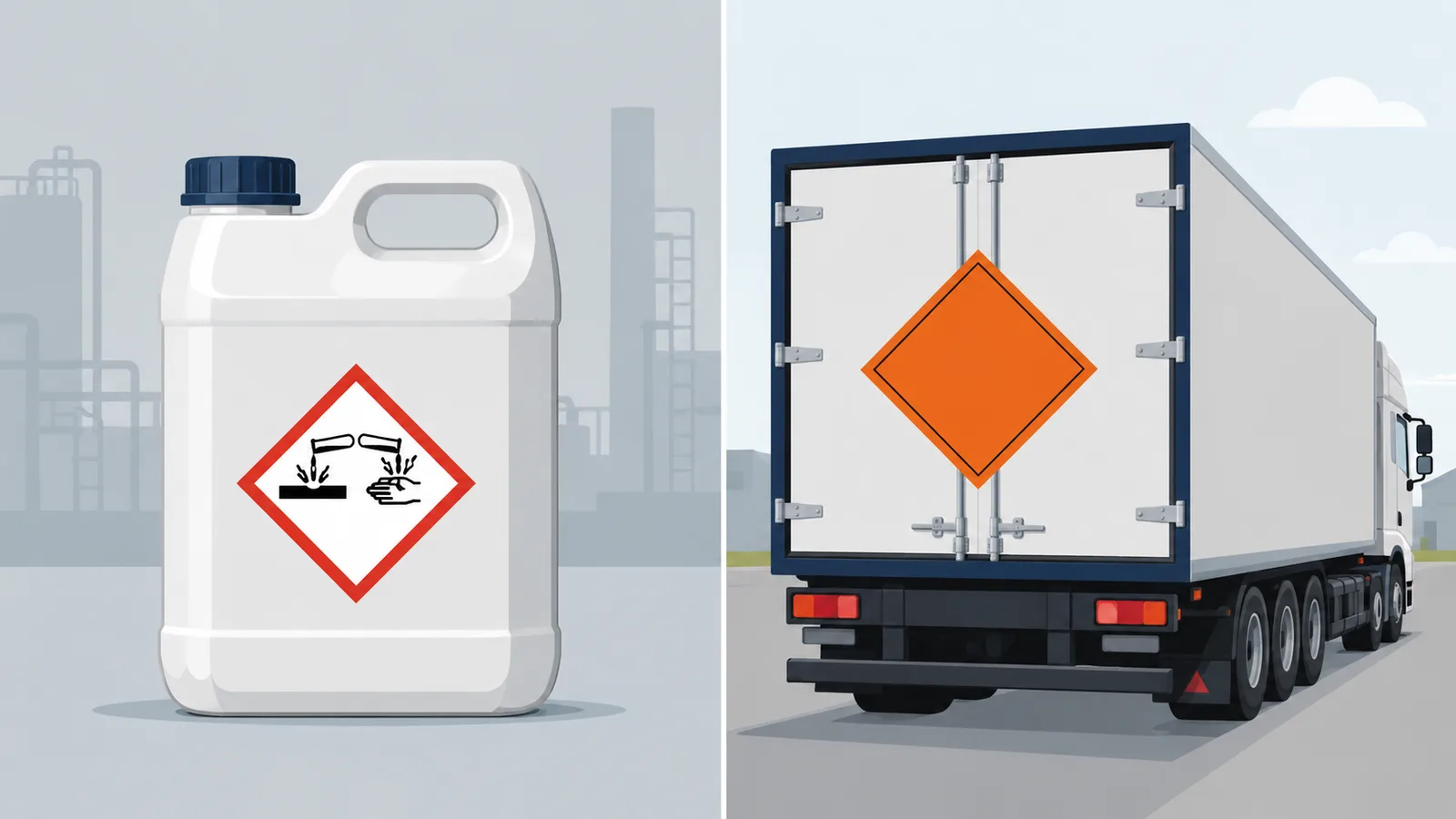
The corrosive pictogram shows two test tubes pouring substance onto a hand and a piece of metal, with corrosion damage visible on both. It warns of substances that cause severe skin burns and eye damage, or that are corrosive to metals. Strong acids (hydrochloric, sulfuric, nitric), strong alkalis (sodium hydroxide, potassium hydroxide), oven cleaners and many drain cleaners carry this symbol. PPE for corrosive substances usually goes well beyond standard nitrile gloves — chemical-resistant gauntlets, splash visors and aprons are typical.
GHS06 — Acute toxicity (skull and crossbones)
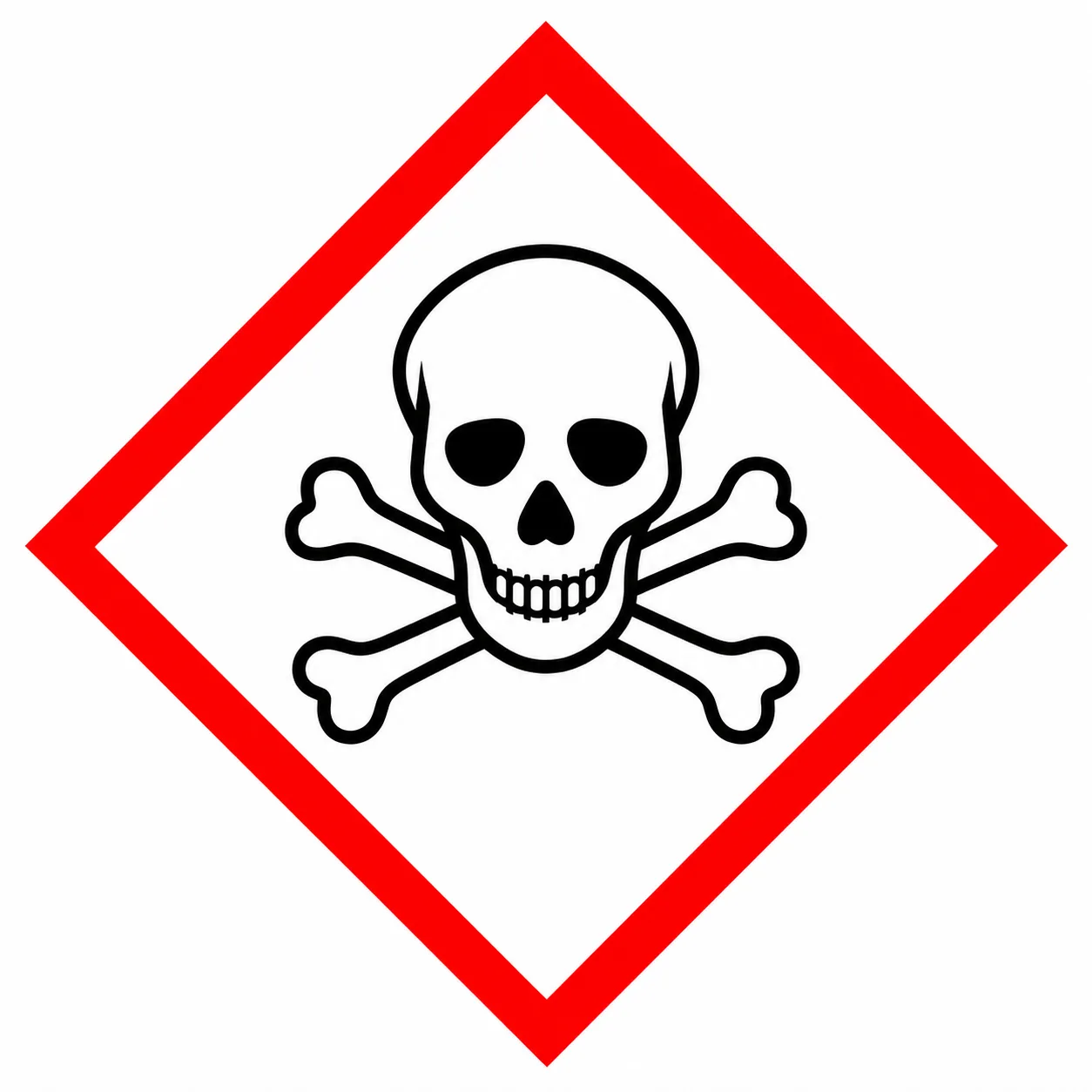
The skull-and-crossbones pictogram identifies substances that are toxic at low doses — fatal, toxic or harmful through skin contact, ingestion or inhalation. It covers the more severe acute toxicity categories. Workplace examples include hydrofluoric acid, certain pesticides (carbamates, organophosphates), methanol and some cleaning chemicals. The "Danger" signal word is used for the most severe categories; "Warning" is used for the less severe. Substances carrying GHS06 typically also need biological monitoring or specific antidote provision as part of the emergency arrangements.
GHS07 — Health hazard (exclamation mark)
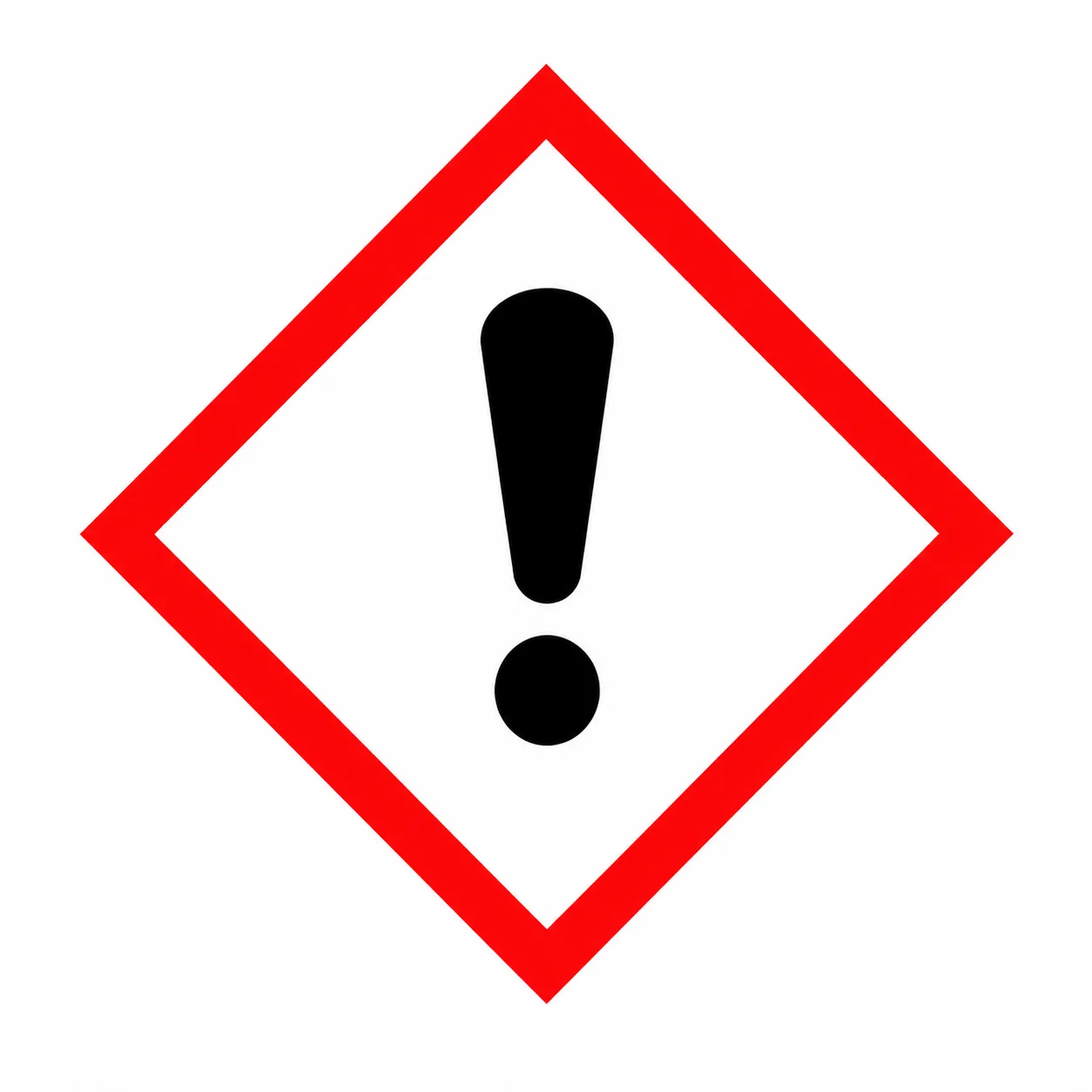
The exclamation-mark pictogram is the most common label you'll see in everyday workplaces. It covers substances that cause acute toxicity (less severe categories), skin or eye irritation, skin sensitisation, respiratory irritation, narcotic effects, and substances that are harmful to the ozone layer. It replaced the older CHIP irritant and harmful symbols. Common examples include many household and commercial cleaning products, paints, adhesives and dilute chemicals. The signal word is usually "Warning" rather than "Danger".
A point of confusion worth flagging: GHS07 covers immediate health effects and lower-severity toxicity. The more serious long-term effects (cancer, reproductive harm, respiratory sensitisation, target organ damage) carry GHS08, not GHS07.
GHS08 — Serious health hazard (silhouette with star burst)
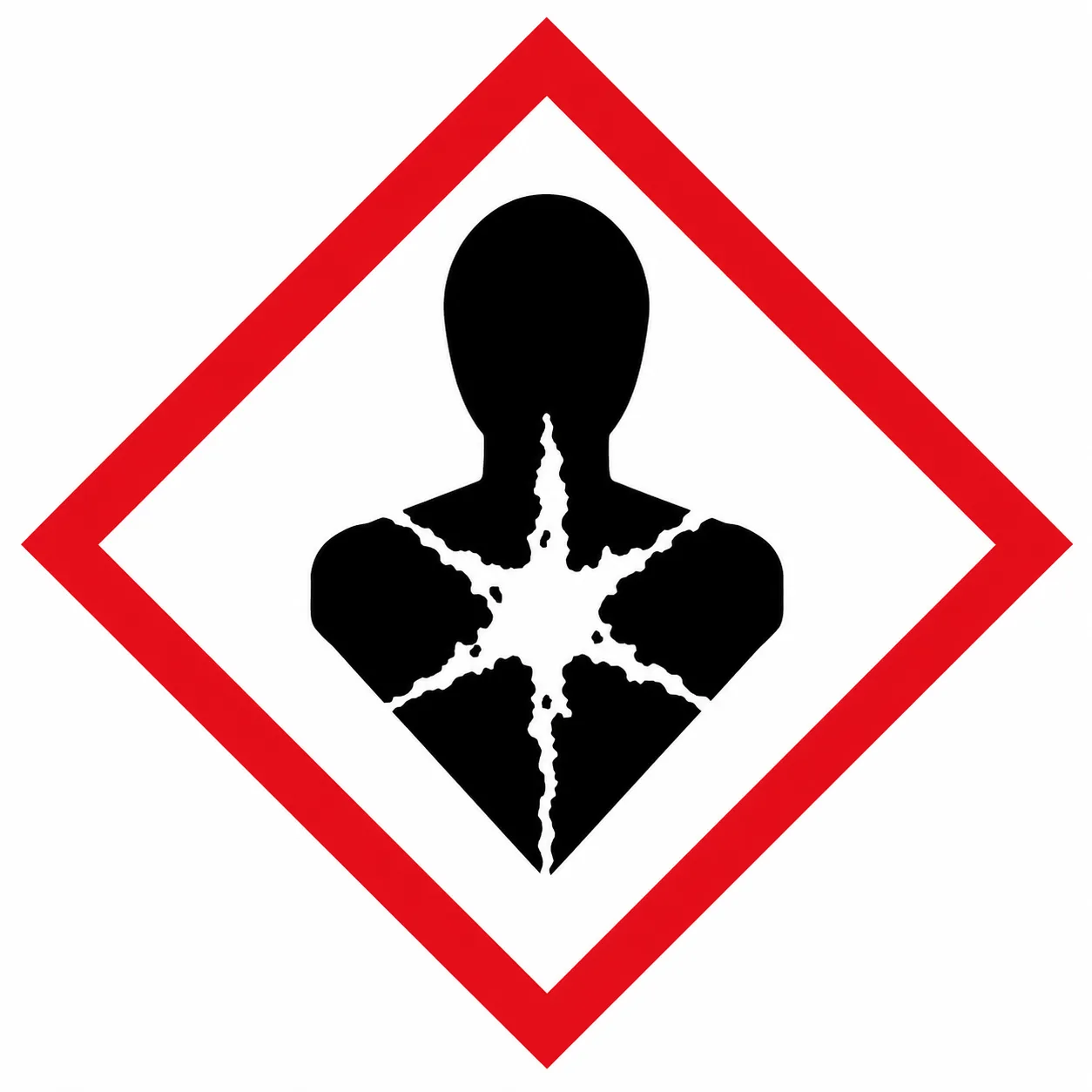
The silhouette-and-star-burst pictogram covers the most serious health effects — carcinogens, mutagens, reproductive toxins, respiratory sensitisers, and substances that cause specific target organ toxicity after repeated exposure. Aspiration hazards (substances that can cause lung damage if swallowed and aspirated) also carry this symbol. Workplace examples include hardwood dust and softwood dust, respirable crystalline silica, formaldehyde, some welding fumes, lead compounds (in non-lead industries — lead at work has its own regulations), benzene and many laboratory reagents.
Substances carrying GHS08 trigger the most stringent COSHH controls. Where they're classified as carcinogens, mutagens or asthmagens, exposure must be reduced as low as reasonably practicable (ALARP) regardless of whether there's a workplace exposure limit under EH40. Health surveillance is usually required.
GHS09 — Hazardous to the environment (dead tree and dead fish)
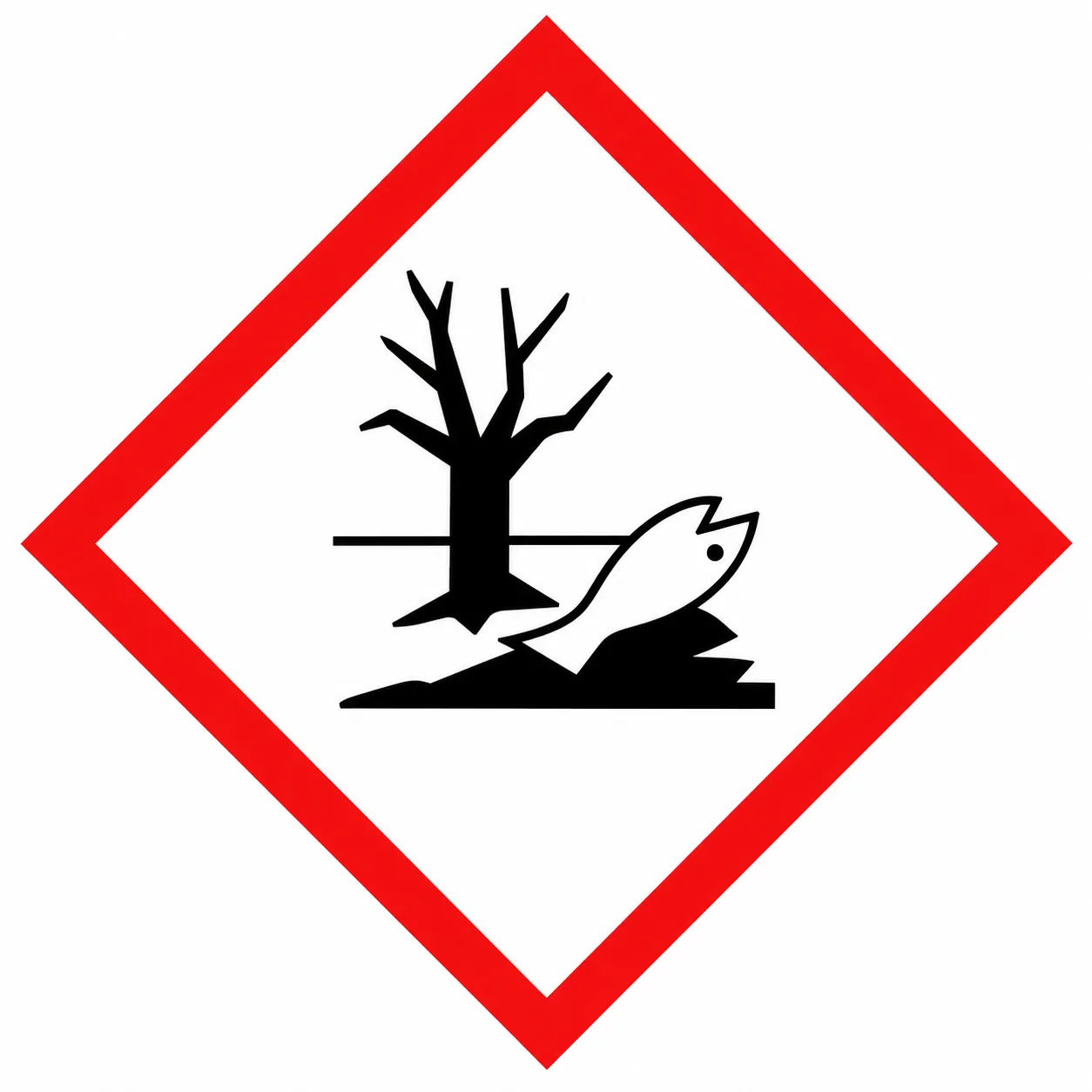
The dead-tree-and-fish pictogram identifies substances that are acutely or chronically toxic to aquatic life. Pesticides, biocides, petrol, turpentine, white spirit, marine antifouling paints and some metal salts carry this symbol. The hazard isn't primarily to workers — it's to the environment if the substance is spilled into drains, watercourses or soil. The relevance for COSHH is that the assessment must consider disposal, spillage and waste handling alongside direct exposure. Substances carrying this symbol almost always also carry other pictograms for their health hazards.
"Danger" and "Warning" — what the signal words mean
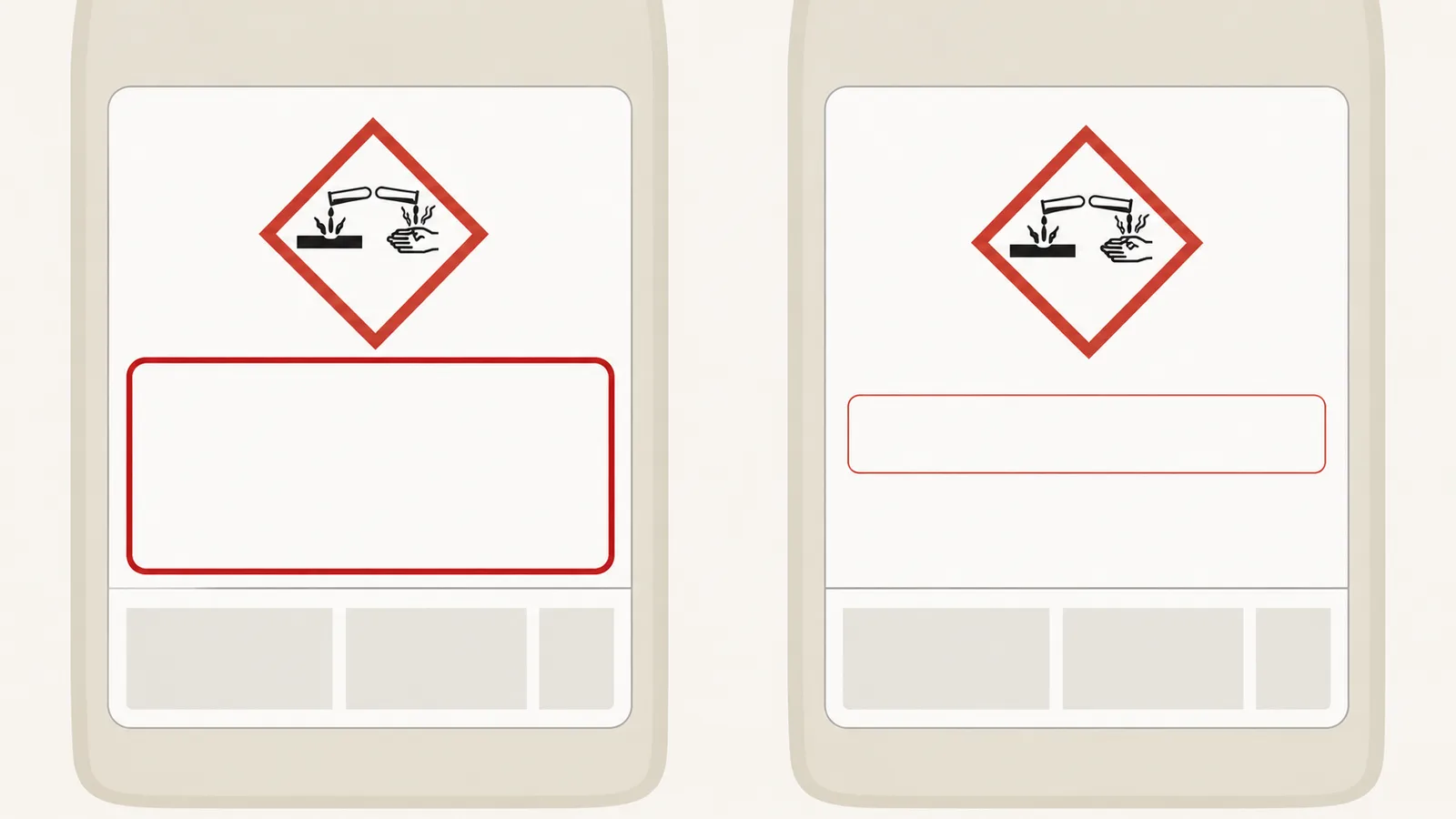
Alongside the pictogram, every CLP label carries one of two signal words. "Danger" is used for the more severe hazard categories within each hazard class. "Warning" is used for the less severe categories. The pictogram itself doesn't always change between categories — a "Warning" flammable label and a "Danger" flammable label both carry GHS02 — so the signal word is the quickest way to tell at a glance how severe the hazard is.
If a label uses "Danger", it means the substance falls into the most stringent hazard category for at least one of the hazards present. The label can carry both severities for different hazards, in which case "Danger" is shown (the more severe signal word always overrides the less severe).
For routine workplace tasks, this distinction matters most when choosing PPE and emergency arrangements. A "Warning" health hazard label is satisfied by ordinary good practice — adequate ventilation, gloves, eye protection. A "Danger" acute toxicity label needs much more — engineering controls before PPE, emergency procedures, possibly health surveillance.
Where you'll see the pictograms
The pictograms appear in several places in a working environment, and the consistency between them is part of the system's value:
- On supplier labels for any container of a classified substance, applied at the point of supply
- In Section 2 of the Safety Data Sheet for each substance, alongside the hazard statements and precautionary statements — the SDS is your primary reference for risk assessment
- On workplace signage at storage areas, fume cabinets and other points where the substances are kept or used (this is required by the Health and Safety (Safety Signs and Signals) Regulations 1996)
- In COSHH assessments themselves, where you transfer the pictograms across from the SDS as part of identifying the hazards
For storage area signage specifically — what symbols to display on a COSHH cabinet, signage for incompatible substance segregation — see our guide on COSHH storage requirements.
One thing to know is that transport labelling uses different symbols. The orange diamond-shaped labels on the side of HGVs and on shipping containers come from the ADR system for road transport of dangerous goods. They look similar at first glance — diamond shapes with black symbols — but they're a different system with different category numbers (UN classes 1–9 rather than GHS01–09). Workers who handle both supply containers and transport packaging need to be trained to read both.
Legal duties around the symbols
Two sets of duties apply.
Suppliers of hazardous substances must classify and label them according to GB CLP. This includes manufacturers, importers and downstream formulators who alter a product's classification by mixing or repackaging. The label must carry the correct pictograms, signal word, hazard statements and precautionary statements, and a safety data sheet must accompany the substance under Article 31 of UK REACH.
Employers receiving hazardous substances must keep the labels intact and visible, ensure containers in use are also clearly labelled if substances are decanted or transferred, display appropriate signage at storage areas, and train workers to recognise and respond to the symbols. The training duty falls under Regulation 12 of COSHH. Where workers handle substances that carry GHS06, GHS08 or GHS05 labels, the training needs to be more substantive than a wall poster — properly delivered COSHH Training typically covers symbol recognition alongside the wider compliance picture.
Frequently asked questions
How many COSHH symbols are there?
There are nine current pictograms (GHS01 to GHS09), defined under the GB CLP Regulation. They cover explosive, flammable, oxidising, gas under pressure, corrosive, acute toxicity, health hazard, serious health hazard and environmental hazard.
What's the difference between "Danger" and "Warning"?
Both are signal words used alongside the pictograms. "Danger" is used for the more severe hazard categories within each hazard class; "Warning" is used for the less severe. If a substance has more than one hazard at different severity levels, the label uses "Danger" (the more severe always overrides).
Are the orange CHIP symbols still valid?
No new product can be sold with the orange CHIP labels — substances had to switch from 1 December 2010 and mixtures from 1 June 2015, with a transition period ending 1 June 2017. You may still find older containers in workplace stock carrying the orange labels. The information on them is technically still valid for the substance as supplied at the time, but workers need to be trained to recognise both systems.
What's the difference between GHS06 and GHS08?
GHS06 (skull and crossbones) is for acute toxicity — substances that cause immediate harm at low doses through skin contact, ingestion or inhalation. GHS08 (silhouette with star burst) is for serious longer-term health hazards — carcinogens, mutagens, reproductive toxins, respiratory sensitisers and substances causing specific organ damage after repeated exposure.
Where do the COSHH symbols come from?
They originate from the United Nations Globally Harmonised System of Classification and Labelling of Chemicals (GHS), adopted internationally from 2003. The UK and EU brought them in through CLP, and after Brexit the UK continues to use them through the retained GB CLP Regulation.
Do COSHH symbols apply to mixtures as well as substances?
Yes. Both substances and mixtures are classified and labelled under CLP. Mixtures are classified by reference to the hazards of their components, with specific rules for how component classifications combine to produce the mixture's overall classification.
Where should COSHH symbols appear in the workplace?
On every supplier container of a classified substance, in Section 2 of the safety data sheet, on workplace signage at storage areas and use points, and in the COSHH assessment for each substance. Where containers are decanted into smaller working containers, the smaller containers must also be labelled.
Related guides
- COSHH Cleaning Colour Codes Explained
- The 8 Steps to COSHH Compliance
- The COSHH Hierarchy of Control: How to Choose Controls in the Right Order
Make sure your team can recognise the hazard symbols and work safely with substances covered by COSHH.
Explore the COSHH Training Course →
Mark writes about workplace health & safety, COSHH and accredited online training for COSHH Training, part of Online CPD Academy.